The Story of Avimor:
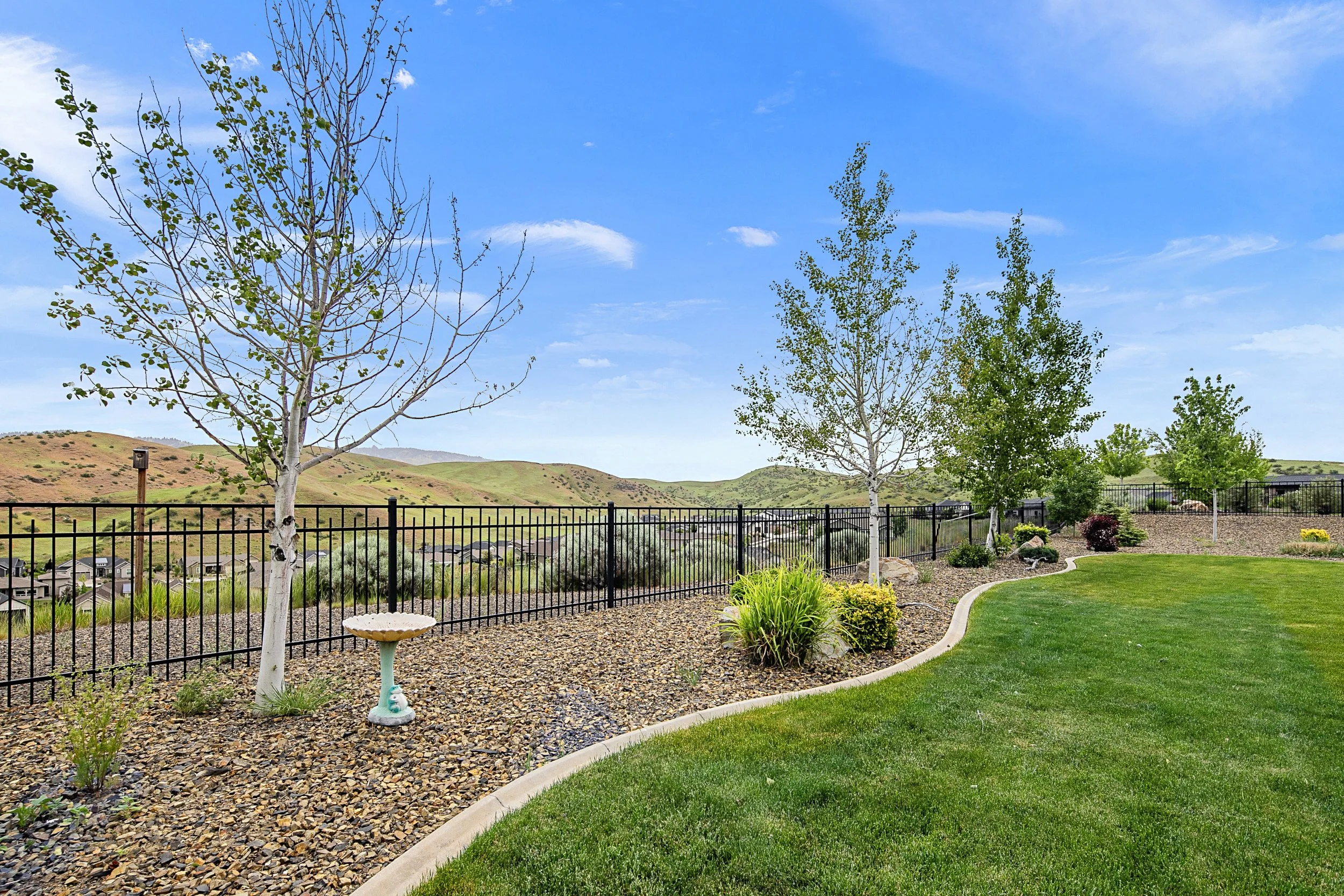
A view from one of the homes in Avimor
How 100 years of land stewardship became one of the most ambitious master-planned communities in the American West.
Eight minutes north of Eagle on Highway 55, the foothills open up, the highway noise drops away, and something unusual comes into view — a village square, a coffee shop, a fishing pond, and 100 miles of trails threading into the hills. This is Avimor. But to understand what it is today, you have to start more than a century ago.
Pre 1916: A Stage Stop Called Howell
Long before there were subdivisions or master plans, the land that would become Avimor had a name and a purpose. The site was once a small but busy stage stop known as Howell; a waypoint along the routes that carried travelers and goods through the Idaho foothills. The terrain was rugged, the views were sweeping, and the land had a character all its own.
That character caught the attention of the McLeod family, who acquired the property in 1916 and set about turning it into something lasting. They called it the Spring Valley Ranch, and for the better part of a century, they ran it as a working sheep and cattle operation — one of the enduring ranches of the Boise foothills.
1916-1999: A Century of Land Stewardship
The McLeod family didn't just ranch the land, they studied it, cared for it, and developed a philosophy around it that would eventually shape everything Avimor became. In 1952, Colin "Smokey" McLeod was named Ada County's Grassman of the Year, recognized for his exceptional work in developing Idaho grassland through balanced grazing, erosion control, and native plant re-seeding.
"Mr. McLeod makes use of the latest scientific information, is very cooperative with agencies in the way of trying out new recommendations and new ideas."- Ada County awards committee, 1952
The McLeod family was implementing sustainable land practices decades before the phrase "sustainable development" entered the mainstream. That heritage would become the philosophical backbone of the Avimor master plan; the idea that how you treat the land today determines what future generations inherit.
Early 2000s: A Family Decision That Changed Everything
By the turn of the millennium, Sandy McLeod and his family faced a question that many landowning families eventually confront: what do you do with 23,000 acres when the ranching era winds down?
The easiest answer would have been to sell parcels. Developers were hungry for foothill land, and the McLeods could have walked away wealthy from a simple patchwork sell-off. But that option; a "checkerboard" of disconnected developments fragmenting the landscape, felt wrong to them. Instead, they chose a harder path: a single, unified master plan that would protect the land's character while building something genuinely worth living in.
They opted for what planners call Conservation Design; a method that requires developers to identify environmental features, natural corridors, creek beds, and scenic ridgelines first, then arrange homes around them rather than bulldozing through them. The result would be clusters of neighborhoods connected by trails, surrounded by open space, and anchored by walkable village centers.
The family considered selling individual parcels, a patchwork quilt of development across the foothills. They decided, instead, that a master plan with an emphasis on conservation and small-town values would be the best way to honor their vision for the land. - Avimor Story, avimor.com
The Name: Why "Avimor"?
The name itself carries meaning. Avimor is derived from Aviemore, a small town in the Scottish Highlands known for its rolling hills, direct access to the outdoors, and tight-knit community character. The similarity to Idaho's Boise foothills; the open ridgelines, the recreational culture, the sense of being close to both nature and civilization , made the Scottish parallel feel apt.
The spelling was Americanized to "Avimor," but the spirit of the name was kept: a place where the landscape shapes daily life and neighbors actually know one another.
2002-2008: Breaking Ground
In 2002, the McLeod family partnered with SunCor, a large national developer, to bring the master plan to life. They submitted a Planned Community application to Ada County in 2004, and navigated years of planning approvals, infrastructure construction, and the inevitable political headwinds that accompany any ambitious development in a growing region.
Among the early investments was a state-of-the-art Wastewater Reclamation Facility, built in 2006-2007 at a cost of over $5 million, a signal that Avimor was building for the long term, not the quick flip. The first homes went up in 2008, just as the American economy was hitting its worst recession in generations.
The timing was brutal, but the community survived. The partnership eventually evolved into Avimor Partners, LLC, with Dan Richter emerging as the managing partner and general manager who would guide Avimor's growth through the following decade and beyond.
2008-2021: Building the Village Square
Recovery was slow after 2008, but steady. Avimor built homes at a measured pace and invested in the amenities that would make the community worth moving to. In 2014, the 12,000-square-foot Community Center was completed, an indoor swimming pool, fitness center, meeting rooms, library annex, and staging kitchen all under one roof.
The village square took shape around it. Hyde Perk Coffee opened on Main Street. A fishing pond was stocked for catch-and-release in Towne Lake Park. The five-acre Foothills Heritage Park was built with an amphitheater, soccer field, baseball diamond, tennis and basketball courts, and pickleball courts. And the trail network; the 100+ miles of hiking and biking trails winding through the foothills became one of Avimor's signature draws, eventually earning a spot on AllTrails' top ten lists for hiking and biking in the region.
By 2019, Avimor was completing nearly 100 homes per year. The community had grown from a vision into a recognizable place; one where residents held chili cook-offs and holiday festivals and actually knew their neighbors by name.
3032 to now: A Community Still Growing
In April 2021, Boise County Commissioners approved Avimor's expansion across the Ada County line, greenlighting up to 1,700 new homes along Highway 55 , a phase expected to unfold over 12 to 15 years across more than 6,100 acres. The long-range vision calls for roughly 10,000 homes spread across Ada, Boise, and Gem counties when Avimor reaches full build-out over the coming decades.
The key promise underpinning that scale: homes will only occupy about 7,000 of the 23,000 acres. The rest stays open. Avimor has a Conservation Director on staff not a title you see often in residential development to ensure that fire-wise principles, native habitat, and trail access are protected as the community expands.
Recent years have brought new chapters. In 2024, the Idaho Novus Classical Academy opened within Avimor; a public charter school offering kindergarten through 12th grade, focused on traditional learning and civic character. And in 2026, Avimor Academy, a new early learning center, opened, deepening the community's investment in families with young children.
Gather Brewing has taken up residence on the village square. Mortgage incentives are available for buyers exploring the newest homes. And the pickleball courts are, by all accounts, very busy.
A Place Built to Last
What makes Avimor unusual isn't any single amenity; it's the consistency of the idea behind it. Most developments are built by people who will move on to the next project. Avimor was built by a family that had lived on the land for a century and intended for the community they created to outlast them.
From a cattle ranch to a stage stop, from a conservation design experiment to a living, growing village, Avimor is, at its core, a bet that people want more than square footage. They want trails out their back door and coffee down the street and neighbors who show up to the chili cook-off. They want a place with a story. And at Avimor, the story is still being written.